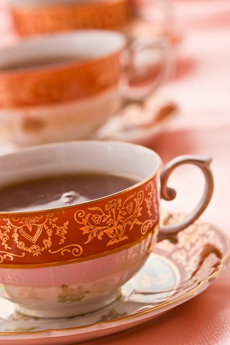
 Black tea has long been favored by Westerners. Photo by A.G.Photographer | CanStock. Black tea has long been favored by Westerners. Photo by A.G.Photographer | CanStock.
March 2005
Last Updated August 2017
|
|
Types Of Tea & Tea Terminology
Tea Glossary Page 2: Terms With B
This is Page 2 of a 15-page tea glossary. Click on the links below to visit other pages. This Tea Glossary is one of many delicious food glossaries. Check out your favorite foods!
Click on a letter to go to the appropriate glossary page:
a b c d e f g h i j k l m n o p q r s t u v w x y z
This glossary is protected by copyright and cannot be reproduced in whole or part.
You are welcome to link to it.
BAGGY
An unpleasant taste, referring to tea that has been carried or wrapped in unlined burlap bags.
BAKEY
An unpleasant taste caused by firing the leaf at too high a temperature (over-firing) and removing too much moisture. Not as strong a flavor as burnt.
BALL TEA
Chinese tea compressed into a ball for protection. See also brick tea.
BANCHA
An everyday Japanese green tea produced from the bottom part of tea leaves, large and thick leaves that produce a slightly less aromatic, more robust and somewhat more astringent brew than sencha. It is made from larger, more mature leaves and stems of the autumnal and winter tea harvests. Bancha is preferred by people who seek a more robust flavor.
BASKET FIRED
Japanese tea that has been cured in baskets by firing or drying.
|
|
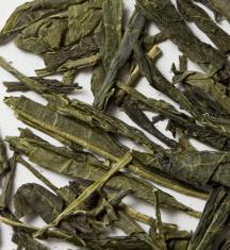
Organic bancha tea is available from ArborTeas.com. |
BERGAMOT
The essential oil of the bitter bergamot orange, used to flavor black tea that is then called Earl Grey tea.
BILLY
The Australian term for a tin pot with a wire handle, suspended over an open fire to boil tea.
BISCUITY
A pleasant characteristic often associated with Assam teas.
BITTER
An unpleasant taste associated with raw teas or over-steeped teas.
|
|
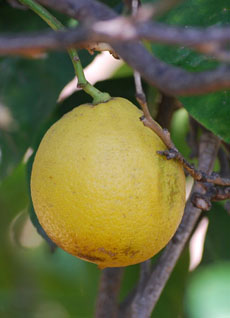 Bergamot orange. Seeds are available from TradewindsFruit.com. Photo © Tradewinds Fruit. Bergamot orange. Seeds are available from TradewindsFruit.com. Photo © Tradewinds Fruit. |
BITTER TEA
A style of tea brewed in Kashmir. Tea is boiled in a copper vessel. Red potash, aniseed and salt are added to the tea before it is served, traditionally from a brass or tin-lined copper teapot.
BLOOMING TEA
See display tea.
BLACK COHOSH TEA
An herbal tea used to ease the symptoms of menopause and menstrual discomfort. It is also used for cough, hardening of the arteries, high cholesterol levels and rheumatism. Black cohosh has not been evaluated by the FDA for effectiveness or safety.
BLACK TEA
Black tea is green tea that has been oxidized by fermentation. Black tea is the most common form of tea drunk worldwide. Black tea is fully oxidized and roasted (oolong is half-oxidized). The green tea leaves are allowed to oxidize, or ferment, for two to four hours, to a black color. After plucking and gathering, the leaves are spread out in the air, and then hand-tossed until they become soft and flaccid, when they are roasted for a few minutes, and rolled. They are then exposed to the air for a few hours in a soft and moist state, finally withered or dried slowly over a low heat charcoal fire. |
|
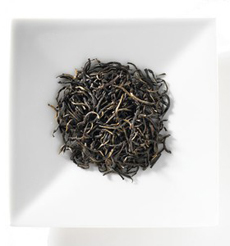
Organic black tea from Ceylon is available from Mighty Leaf Tea. |
The leaves are then fired at a higher temperature to fix the flavor of the tea before being sorted into different leaf quality and sizes. The operation of roasting and rolling is sometimes repeated several times, until the leaves have become the proper color. When brewed, black tea forms a reddish or reddish-brown liquor or color, has a maltose flavor and a rich flowery aroma. The principal grades of black tea are Bohea (the poorest quality); Congou; Oolong; Souchong, one of the finest varieties; and Pekoe, a fine-flavored kind, made chiefly from young spring buds. Styles of black tea, based on provenance and/or blend, include: Assam, Ceylon, Darjeeling, English Breakfast, Golden Needle, Irish Breakfast, Keemun, Lapsang Souchong, Keemun, and Yunnan.
Black tea contains the most caffeine of all teas (due to the extended firing process), but much less than coffee: about 40 mg per cup, depending on strength and steeping time. Coffee, by comparison, has 80 to 100 mg per cup. The water-extractable polyphenol content of black tea ranges from 3% to 10%; green tea has between 30% and 40%.
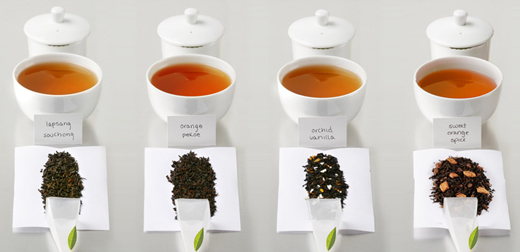
Black teas: Lapsang Souchong, Orange Pekoe, Orchid Vanilla, Orange Spice. Photo courtesy of TeaForte.com.
BLEND or BLENDED TEA
Many teas—including English Breakfast and Earl Grey—are not a single variety but are blends of different teas. Blends are created by a tea taster who decides what proportions of each different tea leaf are required to produce the flavor of the blend. In addition to creating distinctive flavors, blending is used to create consistency in taste from one growing season to the next. Read more about blended tea.
BLUE TEA
Another term for oolong tea, based on the bluish hues of dried oolong tea leaves.
BODY
The strength of the liquor combined with its viscosity (weight on the tongue). Body may be full, light, et al. A tea with good body has both fullness and strength, as opposed to being thin and weak.
BOHEA
Tea from the Wu-i Hills in Fukien, China. Originally, the term was applied both to black China tea and to tea from Indonesia. In the 18th century, Bohea, or Bo-hee, was the generic name given to the tea drink.
BOUQUET
All of the characteristics of smell that are perceived through the nose when one sniffs the teas.
BREAKFAST TEA
Breakfast teas are strong black tea blends made to accompany a hearty, English-style morning meal and to go well with milk. Examples include Chai (flavored with Indian spices), Earl Grey (flavored with bergamot orange), English Breakfast (a base of Keemun with other black teas), Irish Breakfast (a malty Assam blend) and Orange Pekoe (Ceylon black tea). Breakfast teas are more robust than afternoon tea blends. However, these distinctions descend from the old British tea-drinking tradition. Feel free to enjoy whatever tea you like, whatever time of the day.
BUBBLE TEA
Bubble tea is a sweet, cold, black or green tea drink created in 1983. The history of bubble tea says that Mr. Liu Han-Chieh, proprietor of the Chun Shui Tang teahouse in Taichung, Taiwan, introduced tapioca pearls. Prior to then, tea was not served cold in Taiwan. Liu Han-Chieh actually got the idea when visiting Japan, where he saw coffee served cold. He began to serve iced tea.
Then in 1988, his product development manager, Ms. Lin Hsiu Hui, was sitting in a staff meeting with iced Assam tea and a sweetened tapioca pudding called fen yuan. For fun, she poured the tapioca balls into her iced tea, and the rest is history.
The new food fad was especially popular among school children, who liked them in cold, milky, flavored tea drinks. The large, chewy pearls are now made in gray-black or beige-white. The teas became available in many flavors, made with flavored powders that give color to the drink.
|
|
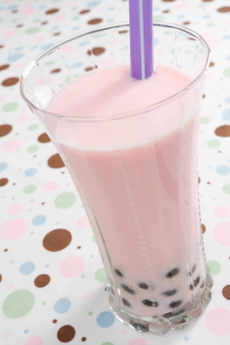
Strawberry bubble tea. Photo by Dream Big Photos | IST. |
The tapioca pearls look like bubbles, and earned the drinks the name, “bubble tea." Other names include black pearl tea, boba, boba drink, boba ice tea, boba nai cha, pearl ice tea, pearl milk tea, pearl shake, pearl tea drink, tapioca ball drink, zhen zhou nai cha, plus initials: BBT, PT and QQ (which means “chewy” in Chinese). Also popular is a “freeze” made with tea, fresh fruit, simple syrup, ice and tapioca balls.
Today, bubble tea shops serve a choice of tea (e.g., classic milk tea, jasmine milk tea, horchata), a choice of toppings (boba—tapioca balls), almond jelly or grass jelly (a gelatin similar in texture to Jell-O), sweet red beans and others. Customers can specify the sweetness level. Some shops even offer organic, soy and almond milks, plus lactose-free cow’s milk. Some companies used powdered teas and milk, others fresh-brewed tea and whole milk.
BRASSY
An unpleasant metallic tang or acidic bite, the result of improperly withered tea.
BREW
One of several terms, also including infusion and liquor, that refer to the brewed tea.
BRICK TEA
Tea leaves that have been steamed, dried and packed into molds, where they are compressed into bricks, blocks or disks (some can be mound-shaped). Often, a design is pressed into the surface. Although tea bricks are less commonly produced in modern times, (other than post-fermented pu-erh teas, brick tea was the most commonly used form of tea in ancient China prior to the Ming Dynasty, where the tea was shaved into boiling water. (Tea bricks can be made into beverages or eaten as food—for example, shaved and boiled with butter and salt to make soup). Tea bricks also served as a form of currency in ancient times—and were used as currency in Siberia until World War II. Bricks can be high quality tea or common tea pressed with tea dust.
|
|
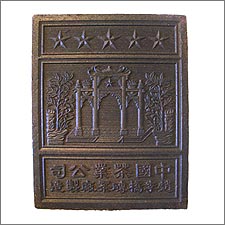 Brick tea. Photo courtesy Wikimedia Commons. Brick tea. Photo courtesy Wikimedia Commons.
|
BRIGHT
The quality of a lively fresh tea of good quality. Also used to describe a lively, bright appearance: a bright red brew or light leaf, as opposed to a dull brown or black color.
BRISK
Lively, not flat: a tea high in astringency. The term has been trademarked by Lipton.
BROKER
A tea taster who negotiates the selling of tea from producers, or the buying of tea for packers and dealers, for a brokerage fee.
BUD
See two leaves and a bud.
BUTTER TEA
A beverage first served in Tibet, then in India, where boiled tea is mixed with salt and soda. It is then strained into an urn containing butter and dried ground cereal (often barley), churned, and served in a basin. Often a lump of butter is added when serving. The result is more like a soup than a conventional cup of tea.
Continue To Page 3: Tea Terms Beginning With C
Go To The Alphabet Index Above
Lifestyle Direct, Inc. All rights reserved. Images are the copyright of their respective owners.
|