Photo glossaries of more than 100 foods and beverages let you explore your favorites. Take a look!
Get all new posts by email:
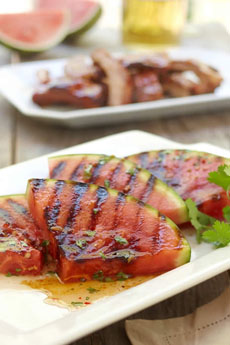
Watermelon is high in the antioxidant lycopene. It can be enjoyed in many recipes. See our watermelon article for more information, along with this recipe for grilled watermelon. Photo courtesy Watermelon.org.
This glossary is protected by copyright and cannot be reproduced in whole or in part. You are welcome to link to it.
FLAVONOID
A large group of water-soluble plant pigments, commonly referred to as bioflavonoids in the media. All flavonoids are biological in origin, so the two terms are interchangeable. Flavonoids are most commonly known as powerful antioxidants, protecting against oxidative and free radical damage. They have been referred to as “nature’s biological response modifiers” because of strong experimental evidence of their ability to modify the body’s reaction to allergens, viruses, and carcinogens. They show anti-allergic, anti-inflammatory, anti-microbial, and anti-cancer activity. As a result, consumers and food manufacturers have become interested in flavonoids for their medicinal properties, especially their potential role in the prevention of cancers and cardiovascular disease.
Red wine is full of flavonoids. Photo courtesy Traipiche Vineyards.
The beneficial effects of fruit, vegetables, tea, and red wine have been attributed to flavonoid compounds. Cocoa is loaded with the flavonoid epicatechin; cocoa has been found to have nearly twice the antioxidant content of red wine and up to three times that of green tea (dark chocolate should be consumed with a cocoa content of 70% or greater). Other good sources of flavonoids include all citrus fruits, berries, onions, parsley and legumes, plus green tea and red wine.
FREE RADICALS
Highly unstable and reactive molecules that attack, infiltrate, and injure vital cell structures. They are constantly formed as a natural by-product of body chemistry. Free radicals are highly toxic and can damage important cellular molecules such as DNA, lipids, or other parts of the cell, impairing the brain and other tissues. They are believed to accelerate the progression of age-related conditions and other diseases.
GREEN TEA
All tea comes from the leaves of the Camellia sinensis plant (referred to as the tea tree, tea plant, or tea bush); the difference in the wide varieties of tea lies in the processing and the terroir (e.g., the difference in Indian versus Chinese versus Japanese growing environments, and different regional environments within countries). Unlike black and oolong teas, green tea is made from leaves that are not fermented before they are dried. Thus, the antioxidant levels of green tea are five times higher than those of black tea. Green tea is also high in vitamin C. Green tea is produced by panning freshly picked tea leaves at a high temperature for a short period of time to stop oxidation before it starts, which also preserves most of the polyphenols. (Note: See also white tea. White tea is also not fermented and is even higher in antioxidants.)
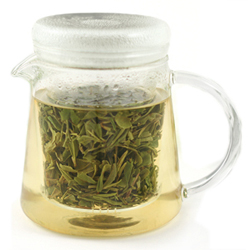
Green tea is a darling of the antioxidant crowd. Glass teapot and green tea from Rishi-Tea.com.
LUTEIN
Lutein is a xanthophyll and one of 600 known naturally occurring carotenoids. Lutein is synthesized only by plants and, like other xanthophylls, is found in high quantities in green leafy vegetables such as spinach and kale, and also in yellow carrots.
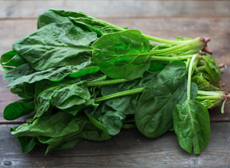
Leafy greens are good sources of lutein. Spinach photo courtesy GoodEggs.com.
LYCOPENE
Lycopene is a bright red pigment and phytochemical found in watermelon, tomatoes, papayas, and some other red fruits and vegetables (such as red carrots)—but not in strawberries or cherries. While most people think of tomatoes as the best source of lycopene, watermelon actually has substantially more.
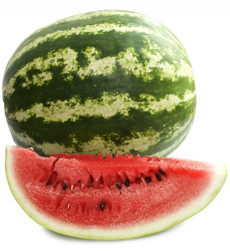
Watermelon has the largest concentration of lycopene. Photo courtesy Baldor Foods.
NON-UPF or NON ULTRA PROCESSED FOOD
UPF is short for Ultra-Processed Food. Most packaged foods today have been engineered using artificial additives, chemical shortcuts, and “ingredients you can’t pronounce.” Ultraprocessed foods not only threaten human health and cognition but also undermine the very foundations of thriving ecosystems.
Launched by the Non-GMO Project, there is now a Non-UPF Verified that provides a clear, science-based standard that ensures verified foods meet rigorous criteria for minimal and moderate processing, supporting cognitive function and metabolic nourishment. Here’s more about the organization.
This logo ensures a food product is not ultra-processed, and thus better for you.
Recent Articles From Our NutriNibbles™ News Feed:
Subscribing notifies you whenever
there are
new additions
to the NutriNibbles™ section.