Photo glossaries of more than 100 foods and beverages let you explore your favorites. Take a look!
Get all new posts by email:
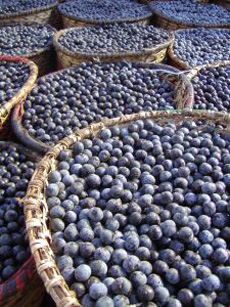
Açaí berries are picked from tall trees, then quickly processed into juice or pulp, since the berries are very perishable. Photo by Ronaldo Salame | SXC.
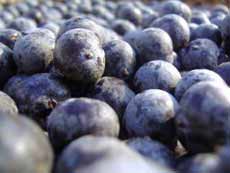
The açaí berry (pronounced ah-sigh-EE) from the Brazilian rainforest has been trumpeted as the next important food, a true superfruit. It may in fact be one of the most nutritious fruits on the planet: Açaí’s antioxidants are significantly higher than green tea, chocolate or blueberries and 10 times higher than red grapes. It has 10 to 30 times more anthocyanins (flavonoids that bind free radicals) than red wine. Açaí also has a synergy of omega 6 and 9 essential fatty acids (healthy fats), fiber, amino acids and vitamins A and C. Photo of açaí berries by Ronaldo Salame.
Great—however açaí is not one of the most palatable fruits. The plain berries are very tart; like eating plain cranberries, very few people enjoy them straight. Brazilians drink açaí in sweetened juices, which are now in U.S. supermarkets in a variety of blends with more familiar fruits (banana, raspberry, etc.).** But not everyone who is health-and-wellness focused wants to add all that sweetened juice to their daily intake (the same is true with cocoa and chocolate, even at 70% cacao). So, tea still looks like a winner: You can drink all you want for zero calories, and even a heaping teaspoon of sugar adds just 25. Note, though, that you can’t add milk: the milk proteins counter the effect of the catechins.
**Naked Juice and Bossa Nova are two brands that offer açaí mixed with other fruit juices; Bossa Nova has a pure açaí sweetened with agave, a honey-like sweetener from the Mexican plant that also is the source of tequila.




 been trumpeted as the next important food, a true superfruit. It may in fact be one of the most nutritious fruits on the planet: Açaí’s antioxidants are significantly higher than green tea, chocolate or blueberries and 10 times higher than red grapes. It has 10 to 30 times more anthocyanins (flavonoids that bind free radicals) than red wine. Açaí also has a synergy of omega 6 and 9 essential fatty acids (healthy fats), fiber, amino acids and vitamins A and C.