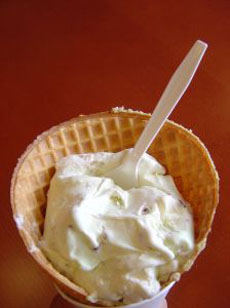
 An oversized waffle cone. Photo by Keith Syvinski | SXC. An oversized waffle cone. Photo by Keith Syvinski | SXC.
July 2005
Last Updated June 2026
|
|
Different Types Of Ice Cream
Ice Cream Glossary Page 5: Terms & Definitions: S ~ Z
This is Page 5 of a five-page glossary of the different types of ice cream. This page explains terms such as sherbet, sorbet, spumoni, and tartufo. See many more food glossaries with your favorite foods.
Click on a letter to go to the appropriate glossary section:
a b c d e f g h i j k l m n o p q r s t u v w x y z
This material is copyrighted and cannot be reproduced in whole or in part
without written permission. You are welcome to link to it.
|
SEMIFREDDO or FROZEN SOUFFLÉ
The word for “half cold” in Italian refers to a class of semi-frozen desserts—semi-frozen custards, ice cream cakes, and tarts. Frozen soufflé is the English term. It may look like ice cream, but it isn’t ice cream per se. Rather, it is more of a frozen mousse, produced by combining equal parts of ice cream and whipped cream.
|
|
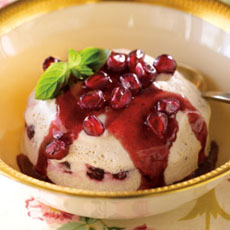
Semifreddo. Here’s the recipe from Pom Wonderful.
|
|
SHAVE ICE or HAWAIIAN SHAVE ICE or SHAVED ICE or SNOW FLUFF
Shaved ice, snow ice, Hawaiian snow ice, and snow cones (see below) are related products: flavored shaved ice. Some are pre-flavored and shaved (like granita), others are plain shaved ice flavored on the spot with syrup.
In the case of shave ice (not shaved ice, a fact that more grammar-conscious people may stumble over), a block of ice is shaved and then flavored with syrup.
Shaving produces a very fine, snow-like ice that easily absorbs the flavored syrup poured over it.
Shave ice resembles a snow cone (see below), but there’s a significant difference: Snow cones are made with crushed, rather than shaved, ice and have a rougher texture. On the Big Island, it is also referred to as “ice shave.”
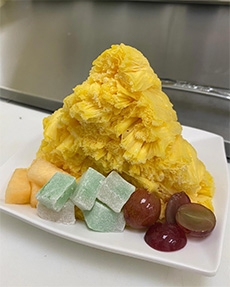
This is not shave ice but shaved snow—see below (photo © Frost City).
|
|
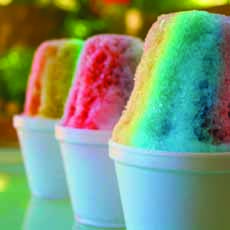
Shave ice (photo © My Sip Shop).
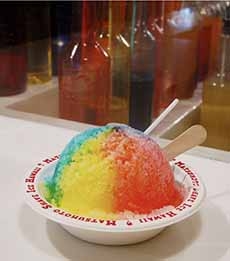
Hawaiian shave ice with syrups—a customized version of the snow cone (photo © Matsumoti Shave Ice).
|
SHERBET
Sherbet (not sherbert, a misspelling and mispronunciation) is a water and fruit-based product like sorbet, with some milk added to provide creaminess (buttermilk. By law, sherbet can contain no more than 2% milkfat, and ranges from 1% to 2%. The milk makes it a slightly heavier product than sorbet (see below). Sherbet is a hybrid frozen dessert that bridges the gap between light fruit sorbets and rich, creamy ice cream.
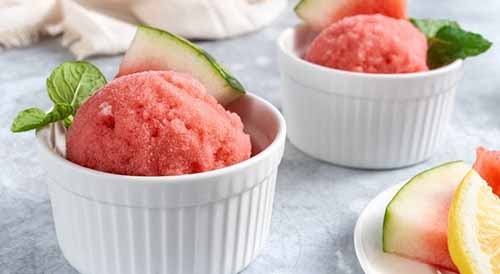
Creamy watermelon sherbert. Here’s the recipe (photo © Taste Of Home).
|
SNOW CONE
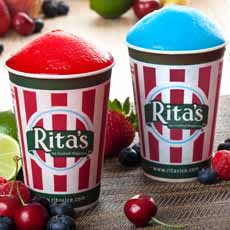
Compacted shaved ice flavored with a choice of bright-colored sugary syrups, generally served in a paper cone or cup. It is very similar to Hawaiian shave ice/shaved ice (above). The syrups are usually fruit-flavored (apple, banana, cantaloupe, cherry, colada, grape, kiwi, lemon, lime, mango, orange, peach, pineapple, raspberry, strawberry) but can also be a spice (e.g., cinnamon) and pop flavors like bubble gum and cola. Snow cones served in a cup are eaten with a spoon; those in a paper cone are eaten like an ice cream cone. They are different from water ice in that water ice is flavored at the time of factory production, while snow cones are shaved and flavored “to order.”
|
|
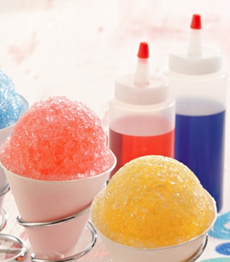
Snow cones: shaved ice flavored with syrups. Photo courtesy of McCormick. |
Interestingly, snow cones are the descendants of the original “ice cream,” which was snow flavored with fruit juice, created 4,000 years ago by the Chinese and learned through trade routes by the Persians 2,500 years ago. See the History Of Ice Cream.
|
SNOW ICE or HAWAIIAN SNOW ICE or SHAVED SNOW
Snow ice is a Taiwanese invention that has taken root in Hawaii. It requires a special machine that shaves the pre-flavored ice into ribbons. Some flavors are water-based and vegan, while others have some added milk. Toppings are part of the fun: Colorful garnishes include azuki beans, jellies, mochi balls, tapioca pearls, and a sauce of sweetened condensed milk. In addition to classic and exotic sweet flavors, there are also savory flavors such as pickle, sriracha, and watercress. Here’s more about snow ice.
The difference between snow ice and shave ice:
- Shaved ice or snow cones consist of finely crushed ice flavored by pumps of colorful syrup.
- Shaved snow/snow ice is like a hybrid of shaved ice and ice cream. It is already flavored (no syrups) and has a creamy consistency that pairs well with toppings.

A machine for shaved/shave/snow ice.
|
|
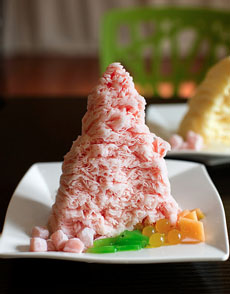
Watermelon shaved ice with toppings. Photo courtesy Hannah Kaminsky | BittersweetBlog.com.
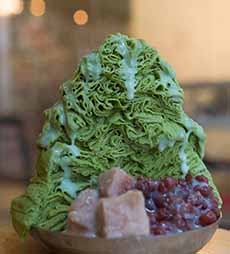
Matcha shaved snow with mochi and red bean garnishes (photo © Grace | NYC).
At left, the ice shaving machine (photo © Japan Trend Shop).
|
|
SOFT-SERVE ICE CREAM
The first machine to create soft-serve ice cream was patented in 1926. Rather than scooping ice cream from a tub, it extruded the ice cream in a swirl, directly from the spout of the machine into a dish or cone.
The new technique used a lighter ice cream mixture that was kept in the machine at a warmer temperature than ice cream in a freezer case.
The warmer temperature (18°F to 21°F) creates a smoother, creamier texture. Soft-serve also has more air whipped into it (overrun), often 30%–60% by volume, making it lighter and fluffier. F
In the U.S., soft-serve ice cream is erroneously called “frozen custard.” That is a misnomer. Frozen custard is another word for French ice cream, made with eggs like a bowl of custard.
The use of “frozen custard” to refer to soft-serve began as a misuse in the 1950s or 1960s, as soft-serve became widespread at chains like Carvel, Dairy Queen, and Tastee-Freez. The term originally appeared in Wisconsin and then throughout the Midwest. Why, we don’t know, but perhaps it was for marketing reasons.
“Custard” may have sounded fancier and different than regular “ice cream.” Plus, most consumers weren’t familiar with the true definition of frozen custard (which, per the USDA, is ice cream enriched with egg yolks).
The misuse spread, and here we are. But you, having read this, are now well-informed.
See frozen custard.
|
|
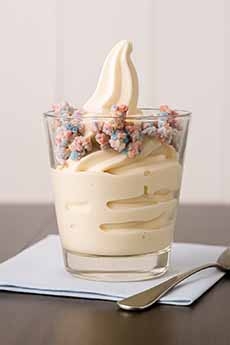
Soft-serve, swirled from a machine, is smoother and creamier than regular ice cream (photo © Burg | Newark, NJ [permanently closed).
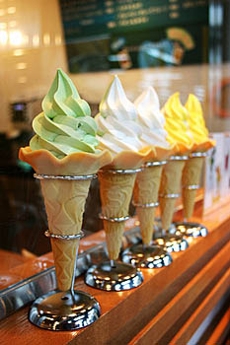
Cones galore (photo © Pink Candy | Dreamstime). |
|
SORBET
A frozen dessert generally made from fruit purée or fruit juice; it can incorporate other flavorings, including herbs and liqueurs. Sorbet is the French word; the Italian word is sorbetto. Unlike sherbet, sorbet technically contains no milk; however, in some regions of Italy (and in some U.S. recipes as well), milk or cream is used, and there is no separate word to distinguish it (so if you steer clear of milk products, read the label or ask the waiter). Some sorbet recipes also use egg whites. While gelato traces its roots “only” as far back as Renaissance Italy, sorbet dates to ancient Roman times.
|
|
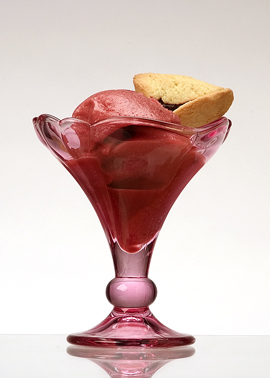
Raspberry sorbet with a cookie garnish (photo © Bruce Shippee). |
In the first century C.E., Emperor Nero, who had a hankering for the cold, sweet stuff, had runners along the Appian Way pass buckets of snow from the mountains, hand over hand, until it reached his banquet hall, where it was mixed with honey and wine. Pre-dating Nero, the Chinese have made concoctions from snow, juice, and fruit pulp for several thousand years.
|
SPUMONI
A Neapolitan specialty, with layers of three different colored and flavored ice cream: Chocolate, pistachio, and cherry, ishttp://www.RegalisFoods.com a popular combination. Other flavors can be used, with nuts and candied fruit added to the layers. Originally, in the days before ice cream, spumoni was sherbet blended with a large amount of Italian meringue (cooked, beaten egg white sweetened with hot sugar syrup); the name comes from the Italian word for foam, spuma.
|
|
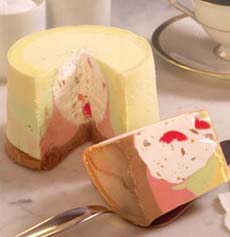
Spumoni. Photo courtesy Lezza.com. |
While this photo shows four flavors (cherry vanilla, chocolate, and pistachio ice creams, plus raspberry sorbet) in a fancy design, you can make a spumoni terrine by layering chocolate, pistachio, and cherry ice cream (3 cups each):
Line a large loaf pan with overlapping pieces of plastic wrap, leaving an overhang on all sides. Soften the ice cream one flavor at a time, until it can be spread in the pan. Cover the pan with plastic wrap and freeze for about 30 minutes; repeat with the other two flavors. In between layers, you can add candied fruit, maraschino cherries, and/or chopped pistachio nuts. Return to freezer until ready to use; slice and serve.
|
SUGAR CONE
The classic ice cream cone, differentiated from the cake cone (or wafer cone) by its pure conical shape, dark color, crunchiness, and brown sugar flavor.
Sugar cones can be found in chocolate as well (made by adding cocoa to the batter) and decorated—dipped in melted chocolate and/or garnished with chocolate chips, coconut, candies, and other confections.
The oversized/jumbo waffle cone—the kind now commonly used in ice cream shops—emerged in the U.S. in the 1970s and 1980s. It was a response to consumers looking for the next great thing, ice cream shop trends, and advancements in food manufacturing equipment.
In the 1980s and 1990s, jumbo waffle cones became widespread. They enabled customers to have multiple scoops and became a point of excitement when dipped in chocolate, coated with sprinkles, and even shaped into “waffle bowls.”
There’s more about waffle cones and waffle bowls below.
The history of the ice cream cone.
|
|
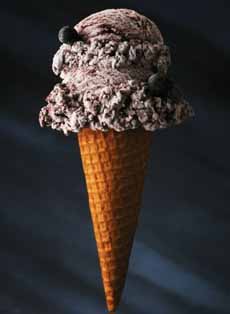
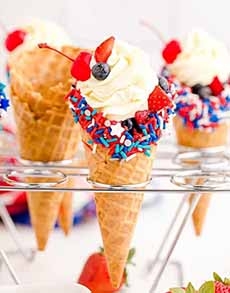
Sugar cone with blueberry ice cream. Photo courtesy of the Wisconsin Milk Marketing Board. Below, a jumbo waffle cone, available from Amazon.
 |
|
SUNDAE
A name invented in America (although exactly where is disputed—see The History Of Ice Cream) for a dish of one or more scoops of ice cream topped with sauce or syrup (generally butterscotch, caramel, chocolate, marshmallow cream/creme, or strawberry). Chopped nuts and whipped cream are generally added, and a maraschino cherry is placed on top. There are endless variations on the sundae, incorporating fruit, cookies, candy, cake, peanut butter sauce, sprinkles/jimmies, and ingredients too numerous to list.
|
|
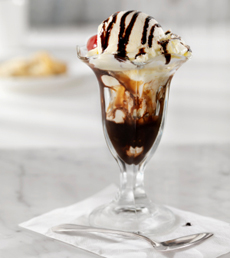
A chocolate sundae in a classic sundae dish. Photo by Lauri Patterson | IST. |
|
SUNDAE CONE
An ice cream novelty. A scoop of ice cream, typically vanilla, is packed into a sugar cone, covered in chocolate, and topped with chopped nuts. Other novelties include drumsticks, ice cream bars, ice cream sandwiches, ice pops, and character-shaped frozen treats.
|
|
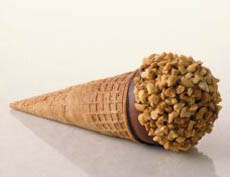
Sundae cone. Photo courtesy of the Wisconsin Milk Marketing Board. |
|
TARTUFO
The Italian word for truffle, tartufo, is a ball of vanilla ice cream, often with a cherry and nuts in the center, enrobed in chocolate. The word is often misspelled in America as “tartuffo.” The first chocolate tartufos (truffles) were chocolate candies, round balls of ganache created just after the French Revolution (1799) by French chefs, and were initially given as Christmas gifts. They were intended to resemble the precious Périgord truffles, hunted in forests. The ice cream version appeared around the Victorian era (1837-1901), when the molding of ice cream into flowers, fruits, and other shapes became popular. The coating should be chocolate cookie crumbs or mini chips, rather than enrobing in smooth chocolate, in order to look like the namesake truffles.
There are actually two versions of tartufo (tartufi is plural). The first is the Victorian-era tartufo: small ice cream balls coated in chocolate or cocoa. Like the truffle chocolates (balls of ganache), they were so-named because they resembled the prized black truffles of Périgord and other regions. A type of bombe glacée, they were considered a fashionable novelty in aristocratic and upper-class dining.
The second type of tartufo—the most familiar variety today—is the Tartufo di Pizzo, created in 1952 in Pizzo, a seaside town in Calabria, Italy, by Giuseppe De Maria, known locally as Don Pippo.
His tartufo wasn’t molded in decorative forms, but it was an accident.
He was preparing ice cream for a wedding feast, but ran out of molds to shape the gelato. In a “make it happen” moment, he cupped chocolate and hazelnut gelato in his hands and hid a cherry and some melted chocolate inside. He then rolled it into a ball and dusted the ball with cocoa to resemble a black truffle.
This Calabrian tartufo became so regionally beloved that it was granted IGP status in 2014, with the name Tartufo di Pizzo.
|
|
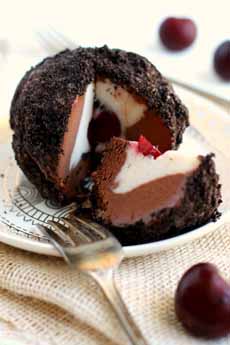
Tartufo. Here’s a recipe from The Pretty Bee.
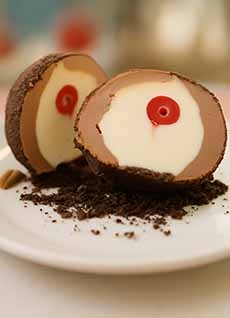
Here’s another recipe from Chef Geoffrey Zakarian (photo © Food Network).
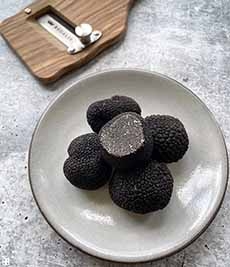
The real black tartufo, or truffle f (photo © Regalis Foods).
|
IGP, Indicazione Geografica Protetta (Protected Geographical Indication), is an EU quality mark that guarantees that a food product’s specific quality, reputation, or characteristic is linked to its geographic origin.
TORTONI
See biscuit tortoni.
|
WAFFLE CONE
While some people confuse the terms “waffle cone” and “sugar cone”—both have waffle patterns—a waffle cone is the original rolled cone. You can see where the edges overlap. There are other key differences. First, waffle cones are made with brown sugar and are darker in color as well as more intense in flavor. They are harder as well. Sugar cones are made in molds and are softer and less flavorful, with a flaky texture. Toward the end of the 20th century, “supersize me” waffle cones were introduced that are twice the size of the original (see photo at top of page). Waffle cones can be plain or decorated with a chocolate dip, chocolate chips, coconut, candies, and other confections. See the photo of the waffle cone at the top of the page. The history of the ice cream cone. See also cone cup and cake cone.
|
|
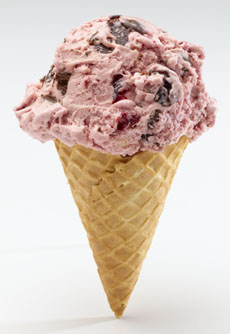
A waffle cone, twice the size of a standard sugar cone. Photo courtesy of Ruby et Violette. |
|
WAFFLE BOWL or WAFFLE CUP
A repurposing of the jumbo waffle cone, which spread in popularity in the 1980s and 1990s, into a bowl form. The benefit: You still got a lot of crunchy waffle cone, and the drips stayed in the bowl.
|
|
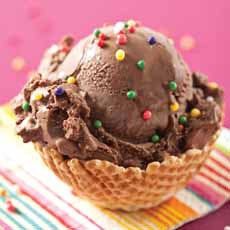
Waffle cup sundae. Photo courtesy Scoop: 125 Specialty Ice Creams. |
Lifestyle Direct, Inc. All rights reserved. Images are the copyright of their respective owners.
|