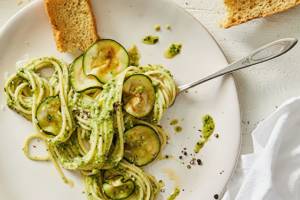
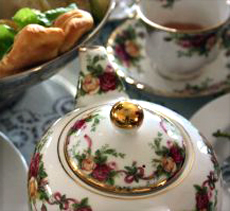
Matching tea and food isn’t difficult; and in the end, as with wine, it’s what you like.
|
| TOMISLAV PODREKA is the co-founder of SerendipiTea, one of the largest independent importers of fine and specialty teas in the U.S. For more information, visit SerendipiTea.com. |
|
September 2006
|
 |
Tea & Food Pairings
Like Fine Wine, For Every Food There’s A Perfect Tea Match (Or Many Perfect Matches)
CAPSULE REPORT: Many people are intimidated when it comes to pairing tea with foods. As with wine, it can be complex to pair tea and food, and there seems so much to learn. While there are basic rules of logic—lighter teas with lighter food, stronger teas with heavier foods—tea expert Tomislav Podreka provides an extensive “travel guide” of pairings as your Baedeker.
Pairings: An Overview
In the regions of China, Japan and India, cuisine and the varieties of teas evolved together—just as cuisines and wines evolved to complement each other in the West. Like wines, teas have numerous styles and many different flavors. When matching the hundeds of available teas with Western cuisine, I would like to tell you that pairing food with tea is a science; but in reality, pairing relies greatly on an individual’s palate in an exploration of the natural interplay between food and tea. “In the end, goodness is for the mouth to decide,” wrote Lu Yu in the Cha l’ Ching, the classic “Book of Tea,” a systematic codification of tea information that was published in 780 A.D.
Long served as an after-dinner libation, pairing tea with food during the meal is a marvelous way to both heighten the dining experience and expand one’s acquaintance with the vast universe of teas and their varying profiles. To be able to enhance the food and emphasize the flavors of a given tea is mutually rewarding.
Today more dining establishments offer extended tea menus. When I discuss the importance of pairing tea and food with managers and waitstaff, I always stress that the best that can be offered to them is a guideline—a helping hand to achieve a nicely balanced list of teas that complements the food offered by the establishment. Whether the diner orders rack of lamb or bagels and cream cheese, the process doesn’t have to be any more complex. (Pairings for both dishes are offered below!)
It’s the same when you’re deciding on food and tea matches at home. You’ll probably be relieved to know that tasting doesn’t require an extremely sophisticated knowledge of food or tea. If you already enjoy food on any level, then you probably have some tasting vocabulary. Start by talking about the characteristics of what you’re eating and drinking. Never be afraid to describe what comes to mind when you are tasting tea, because no impression is too slight, and there is no wrong answer—it’s all what you experience. As with looking at modern art, one person’s perceptions help another person see things in a new light. (Editor’s note: in many category sections of THE NIBBLE, we provide glossaries and tasting terms, including a glossary of tea terms.)
To illustrate my point, let’s take a complex but marvelous example—oolong.
- Aroma. When tasting a lightly oxidized Tung Ting oolong*, you will notice many different characteristics. Initially, you will take in the aroma. The bouquet should immediately provide a floral impression. Soon your senses will target a more specific fragrance—white flowers. Finally, you might pinpoint that wonderful aroma as gardenia.
*Tung Ting, a mountain in central Taiwan, means “frozen peak,” after the cool mists and fogs that surround the mountain, ideal growing conditions for oolong. It is located in the center of Nantou, Taiwan’s largest tea-growing region. Tung Ting oolong is one of Taiwan’s two signature teas, grown at an elevation of 2,500 feet; it is also called jade oolong. The other is its “sister tea,” Oriental Beauty, a dark oolong tea that grows in the north of Taiwan.

- Texture. After you smell the tea, you’ll experience its texture and taste. The texture of Tung Ting oolong will probably impart a buttery feel—a mouth-coating sensation.
- Taste. Beyond texture lies taste. With this tea you should find fruity notes—perhaps coconut, pineapple and peach—and then there will be earthy notes, predominantly of fresh cut wood and nuts. Bring the taste of the fruit, specifically peach, together with the wood and nut notes, and imagine sucking on the pit of a peach after you have eaten the flesh of the fruit. Now you have a peach-pit flavor. This is the ideal flavor profile of an oolong, especially a Tung Ting.
So what does it all mean? Now that you have broken down the complex profile of a single tea, you should understand how important it is to match that profile with complementary smells, textures and flavors of food.
- For example, the floral bouquet of the Tung Ting oolong would make it the perfect counterpart to a spicy dish.
- At the same time, its buttery texture would combine well with baked goods and chocolates, and its fruity notes would work with various types of fish and meat.
- This may seem like quite a lot for a single tea to handle, but tea is deliciously versatile.
This also may seem like a lot for a beginning taster to learn. You’ll know when you’ve discovered the perfect marriage of flavors, but take some comfort in the guide below.
Pairings
Sometimes a “laundry list” can best illustrate the art of pairing tea with food. Here is a suggested pairing table. If what you are looking for is not listed, find something similar, but let your palate be your guide.
Breakfast & Brunch
In the West, black teas are most popular for breakfast, both for their higher levels of caffeine, their compatability with milk due to higher tannins, and their easy pairing with Western breakfast foods.
- General: Assam, Breakfast Blends (e.g. English Breakfast, Irish Breakfast), Pu-erh, Yunnan.
- Higher Tannin: Ceylon, Irish Breakfast, Kenya pair best with milk.
- Heartier Greens: Chinese greens such as Green Pu-Erh or Gunpowder.
- Stronger Brunch Foods: Earl Grey, Lapsang Souchong.
Cheese & Tea Pairings
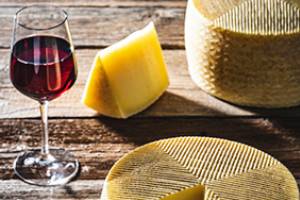
It may seem unusual, but like wines, there are many teas with myriad flavors that pair well with individual cheses.
- Asiago: Keemun, Pai Mu Dan
- Brie: Dragonwell, Ha Giang, Darjeeling, Tung Ting Oolong
- Camembert: Dragonwell, Chun Mee, Gunpowder, Ha Giang, First-Flush Darjeeling, Sikkim
- Cheddar: Tung Ting Oolong, Darjeeling
Cream Cheese: Ceylon,
Darjeeling, Cameroon
- Edam: Ceylon, Autumnal Darjeeling, Buddha’s Finger Oolong
- Gorgonzola: Chun Mee, Ha Giang, Ceylon, Pouchong
- Muenster: Tung Ting Oolong, Pouchong
- Provolone: Ceylon, Nilgiri
Chicken & Tea Pairings
Chicken dishes like Chinese green teas, Darjeeling from India, green jasmine teas and Oolongs. See other poultry pairings in the “Miscellaneous” section below.
- Curry: Darjeeling, Pouchong, Dragonwell, Jasmine Green
- Fried: Assam, Ceylon, Nilgiri, Kenya
- Lemon: Tung Ting Oolong, Darjeeling, Ceylon, Gunpowder
- Roast: Ceylon, Gunpowder, Assam
Chocolate & Tea Pairings
A surprising array of options presents itself with chocolate, depending on the strength of the chocolate dish.
- With dark chocolate, try Assam, Darjeeling, Earl Grey, Gyokuro, Oolong or Pu-erh
- With milk or white chocolate, try Darjeeling, Dragonwell, Oolong, Sencha or Yunnan
Photo courtesy of Woodhouse Chocolates.
Dessert & Tea Pairings
People are accustomed to enjoying a cup of tea with dessert. The canvas of tea is so rich and colorful, you may never ask for a “generic” cup of tea again!
- Baklava: Darjeeling, Pouchong, Oolong (any), Ceylon Black and Green
- Carrot Cake: Sencha, Dragonwell, Vietnamese Green, Ceylon Green and Black, Darjeeling, Ceylon, Assam
- Cheesecake: Sencha, Dragonwell, Vietnamese Green, Ceylon Green and Black, Darjeeling, Keemun
- Citrus: Earl Grey
- Crème Brûlée/Crème Caramel: Darjeeling, Earl Grey, Ti Kuan Yin, Tung Ting Oolong, Dragonwell, Assam, Ceylon Green and Black
- Crêpes: Darjeeling, Oolong (any)
- Dessert With Apples: Darjeeling, Dragonwell, Ti Kuan Yin
- Dessert With Apricots: Oolong (any), Darjeeling
- Dessert With Bananas: Ti Kuan Yin, Tung Ting Oolong, Pouchong, Ceylon
- Dessert With Black Currants: Dragonwell, Darjeeling, Oolong (any)
- Dessert With Coffee Or Mocha Flavors: Yunnan, Assam, Pu-erh, Formosa, Oriental Beauty, Buddha’s Finger Oolong
- Dessert With Raspberries: Darjeeling, Vietnamese Green, Ceylon Green and Black
- Desserts With Strawberries: Darjeeling, Dragonwell, Ti Kuan Yin
- Fruit Compote or Tart: Ceylon, Darjeeling, Earl Grey, Yunnan, Dragonwell, Ti Kuan Yin
- Pecan Pie: Oolong (any), Darjeeling, Assam, Ceylon
- Pumpkin Pie: Dragonwell, Ceylon Green and Black, Darjeeling
- Vanilla: Keemun, Ceylon, Darjeeling, Nilgiri
Fresh Fruit & Tea Pairings
These are hot tea pairings. Many people enjoy iced tea with fruit: Try iced greens and lighter blacks.
- Sweeter greens and lighter black teas, such as a first-flush Darjeeling or a lightly oxidized Oolong like Tung Ting
- Late autumnal Oolongs are also pleasant with fruit
Herb, Spice & Tea Pairings
Tea itself is an herb—a flavorful leaf of a plant. It pairs well with other herbs.
-
Basil: Oolong, Darjeeling, Dragonwell, Gunpowder, Qui Ding Cha
- Capers: Qui Dind Cha, Vietnamese Green, Gunpowder, Ceylon UVA
- Chiles: Assam, Yunnan, Keemun, Formosa White Tip Oolong
- Cinnamon: Yunnan, Assam, Autumnal Darjeeling, Formosa White Tip Oolong, Pu-erh
- Garlic: Sencha, Gunpowder, Gen Mai Cha, Dooars
- Ginger: Tung Ting Oolong, Jasmine Pouchong, Darjeeling
- Mint: Darjeeling, Tung Ting Oolong, Pouchong, Gunpowder
- Mustard: Gunpowder, Chun Mee, Nepalese and African Varieties
- Nutmeg: Assam, Darjeeling, Yunnan, Ceylon
- Vanilla: Keemun, Tung Ting Oolong, Pouchong, Vietnamese Black, Kenyan
Fish/Seafood & Tea Pairings
In general, Japanese green teas, Oolong, and smoky black teas pair well with fish and seafood. Especially try Oolong with rich seafood like crab, lobster, scallops and shrimp.
- Fried: Dragonwell, Chun Mee, Gunpowder
- Grilled: Dragonwell, Chun Mee, Gunpowder, First-Flush Darjeeling
- Smoked: Oolong (any), Darjeeling, Ceylon, Dragonwell
Ham & Tea Pairings
The saltiness of ham requires a more assertive tea.
- Baked: Ceylon, Assam, Kenya
- Smoked: Oolong (any), Darjeeling, Dragonwell
Mushroom & Tea Pairings
Earthy mushroom flavors—some call them meaty—demand more assertive flavors than other vegetables.
- Chanterelles: Assam, Nilgiri, Ceylon, Pu-erh
- Common Mushrooms: Assam, Ceylon, Nilgiri, Dooars
- Morels: Assam, Tung Ting Oolong, Autumnal or Second-Flush Darjeeling, Pu-erh
Miscellaneous Food & Tea Pairings
- Anchovy: Ha Giang, Ceylon Green, First-Flush Darjeeling, Gunpowder, Chun
Mee, Pouchong
- Antipasto: Dragonwell, Pouchong, Ceylon, Dooars, Nilgiri
- Avocado: Tung Ting Oolong, Pouchong, Darjeeling, Sencha
- Bacon: Assam, Gunpowder, Ceylon
- Baked Beans: Ceylon, Assam, Kenya, Yunnan
- BBQ Fish: Gunpowder, Hojicha, Chun Mee
- BBQ Meat: Ceylon, Yunnan, Gunpowder
- Beef (Ground Beef, Stews, Roasts, Briskets): Ceylon, Yunnan, Formosa
Oolong, Kenya, Nilgiri, Gunpowder
- Blinis with Salmon: Tung Ting Oolong, Darjeeling
- Buffalo Wings: Ceylon, Darjeeling
- Carpaccio: Tung Ting Oolong, Darjeeling, Ceylon
- Clam Chowder: Dragonwell, Chun Mee, Ceylon Green
- Corn: Sencha, Hojicha, Chun Mee
- Corn Bread: Ceylon, Assam Kenya, Yunnan
- Couscous: Ceylon, Assam, Nilgiri, Yunnan, Gunpowder
- Curry: Darjeeling, Jasmine Black or Green
- Eggplant: Ceylon, Darjeeling
- Eggs: Darjeeling, Oolong (any), Keemun, Assam, Ceylon, Kenya
- Hamburgers: Ceylon, Darjeeling, Assam, Nilgiri, Kenya
- Lamb: Ceylon, Darjeeling, Yunnan
- Lasagna: Assam, Ceylon, Nilgiri
- Macaroni and Cheese: Sencha, Ceylon
- Meat Loaf: Yunnan, Keemun, Nilgiri, Kenya
- Mexican: Assam, Ceylon
- Pizza: Ceylon, Yunnan, Keemun
- Polenta: Darjeeling
- Pork: Darjeeling, Ceylon, Oolong (any), Hojicha, Lapsang Souchong, Dragonwell,
Gunpowder, Chun Mee
- Potato Salad: Oolong, Pouchong, Darjeeling, Dooars, Nilgiri, Ceylon
- Prawns: Dragonwell, Ti Kuan Yin, Dragonwell, Ha Giang, Ceylon Green
- Quiche: Darjeeling, Ceylon, Sencha, Dragonwell, Chun Mee
- Red Meat (Steak & “Bloody” Red Meats): Ceylon, Chinese Black Keemun,
Flavored Black Tea, Lapsang Souchong, Oolong, Moroccan Mint Tea
- Salami: Ceylon, Nilgiri
- Salsa: Vietnamese Green, Ceylon Green
- Spicy Foods: Red Meat: Ceylon, Chinese Black Keemun, Flavored Black Tea, Lapsang Souchong, Oolong, Moroccan Mint Tea
- Turkey: Oolong (any), Darjeeling, Ceylon, Yunnan
- Vegetables (raw): Ceylon, Nilgiri, Chun Mee, Sencha
Great Tea Reading
 |
 |
 |
 |
 |
The Tea Companion: A Connoisseur’s Guide, by Jane Pettigrew. A comprehensive, authoritative guide to understanding, purchasing, and serving the world's finest teas is beautifully illustrated with full-color photographs of a variety of tea leaves and herbs, as well as their countries of origin. Learn how to store tea so its aromas last, brew it properly for fullest enjoyment, and appreciate the many nuances of flavor to be found in this extraordinary drink. Click here to purchase.
|
|
Tea Basics: A Quick and Easy Guide, by Wendy Rasmussen and Ric Rhinehart. A handy reference that covers all of the essentials of tea buying, brewing, and tasting, and explores the comforts of ritual and healing that tea has provided through the centuries. As you sip and savor the wonderful flavors of black teas, green teas, oolongs, and scented/herbal teas, you'll understand why tea is consumed by more people worldwide than any other drink except water. Click here to purchase.
|
|
The New Tea Companion: A Guide to Teas Throughout the World, by Jane Pettigrew. The definitive guide to teas throughout the world. Beautifully illustrated with detailed information and brewing instructions for over 80 teas. Chapters on tea and health, tea production, tea blending and tea hospitality. Overall, a valuable up-to-date addition to the libraries of both tea novices and professionals. Click here to purchase. |
© Copyright 2005-2008 Lifestyle Direct, Inc. All rights reserved. Images are the copyright of their individual owners.

|
 |
|
|