 |
 |
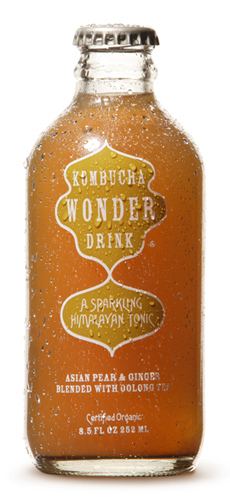
Kombucha Wonder Drink gets our vote for the most
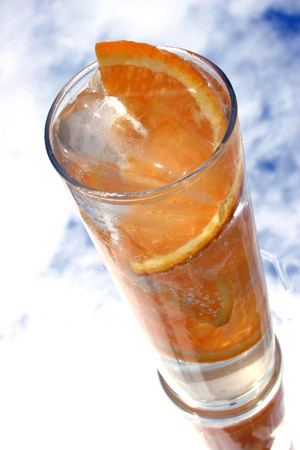
wondrous discovery of the year—although it’s been a West Coast cult favorite since 2001 (and the Chinese have been drinking kombucha since 221 B.C.E.). Shown above, Himalayan Blend with a twist of orange. |
| WHAT IT IS: Brewed, sweetened and fermented tea, drunk cold. |
| WHY IT’S DIFFERENT: Kombucha Wonder Drink has created a line of flavors infusing different teas—green, oolong and rooibos—with different fruit flavors, turning the traditional sweet-and-tart drink into a carnival of complex, adult tastes. |
| WHY WE LOVE IT: The matching of teas to fruits is inspired; the layers of flavors burst onto the palate in elaborate and unexpected ways. Kombucha Wonder Drink is not tea in any recognizable form, it’s not cider, it’s not a soft drink and it’s much more than plain kombucha. It’s an experience unto itself. |
|
|
 |

Kombucha Wonder Drink:
Elixir Of Life?
CAPSULE REPORT: Sparkling tea that’s drunk cold, a restorative from the Himalayas, Kombucha Wonder Drink is both thousands of years old and the latest buzz on the tea scene. It tastes like no other tea because it’s sweetened and then fermented. Fermentation eats up much of the sugar as well as the caffeine, and leaves a hint of delightfully piquant, vinegar-like flavor and an appealing effervescence. The slightly sweet, slightly tart flavor profile is why people either love it or leave it. We loved it so much, we named it one of our top picks out of thousands of products at the January Fancy Food Show.
While dévotées brew kombucha at home, it’s a laborious process. Thank goodness that the folks at Kombucha Wonder Drink do it so well, creating modern flavors that have made this ancient tea our new favorite, sophisticated “soft” drink—at just 60 calories a bottle. It’s organic, too. And if the centuries-worth of health and longevity claims prove true...so much the better! Read the full review below.
|
Other Healthy Foods & Drinks

 |
 |

 |
| Fast Healthy Food: Tasty, Nutritious Recipes for Every Meal—In 30 Minutes or Less, by Reader’s Digest. Create delicious, healthy recipes in 30 minutes or less. Full-color photos of the finished dishes, detailed step-by-step instructions, complete nutritional information, preparation/cooking times, plus creative ideas for varying every recipe. Click here for more information or to purchase. |
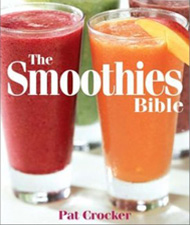
The Smoothies Bible, by Pat Crocker. Kombucha may be good for your health, but so are smoothies, with their concentration of fruit and vegetable nutrition. This book of recipes offers combinations off the beaten path that create refreshing and nutritious beverages. Recipes are delicious and easy-to-follow with lots of added, useful information. Click here for more information or to purchase. |
Minutemeals Quick and Healthy Menus, by Miriam Garron and Evie Righter (Editors). If you’re crunched for time, you can still present a beautiful and delicious meal. Each complete menu has 300 or fewer calories from fat, and 750 or fewer total calories. Click here for more information or to purchase. |
Kombucha Wonder Drink: Elixir Of Life?
Since its introduction in Portland, Oregon in 2001, a cult has developed around Kombucha Wonder Drink. In fact, a trend has begun across the U.S. toward drinking kombucha in general, either brewed at home or in au courant tea salons and restaurants. Spurred by kombucha’s purported health benefits and the pioneering success of Kombucha Wonder Drink, other store brands are popping up; though drunk cold, kombucha is the new “hot” drink in the burgeoning American tea market. But don’t let avoidance of perceived fad foods or even the name itself stop you from trying Kombucha Wonder Drink. You can just enjoy it for the unusual and delightful taste.
Kombucha (kom-BOO-cha) refers to both the fermented, sweetened tea beverage and the fungus used to brew it (more about that below). Kombucha is a fizzy drink. It has less caffeine than regular tea because a portion of the caffeine is consumed by the yeast during fermentation, along with a portion of the sugar. The yeast and lactobacillus cultures transform the tea, much as apple juice becomes cider, so that layers of tartness and pétillance are imbued into the sweetened tea, creating an entirely new beverage. Kombucha has a hint of vinegar, which may be hard to imagine in a beverage; but it is very exciting. It is unique, invigorating and of course, somewhat mysterious. With ancient claims as an “elixir of life,” true believers drink kombucha daily, based on anecdotal evidence—totally unsubstantiated by science—that they will live longer and healthier lives.
Our purpose is not to sell you on kombucha, the elixir of life; but to tell you about Kombucha Wonder Drink, the delicious “Sparkling Himalayan Tonic” (it’s brewed in Portland, Oregon). When we discovered it, it did truly invigorate us, supplying much-needed energy, inner serenity and mental clarity as we slogged through four-plus miles of rich and weighty fare at the January Fancy Food Show in San Francisco. But we love it because of its wonderful flavors and its exotic beverage profile—when was the last time you had a sweet-and-sour drink? While many palates might not like the fermented severity of plain kombucha (it can be described as “tangy”), the wonder of Kombucha Wonder Drink is the inspired way in which the company has paired green, oolong and rooibos teas with heady infusions of fruit flavor.
Five Restorative Wonders
Kombucha Wonder Drink is brewed from organic tea, organic cane sugar and organic or natural fruit flavorings. One 8.5-ounce bottle has just 60 calories and 8 grams of sugar (Asian Pear Ginger has 65 calories). The green and oolong teas are high in antioxidants, like all tea (there’s also a caffeine-free rooibos, which is an herbal tea and thus has no antioxidant qualities). The line is USDA-certified organic.
The best way to drink kombucha is very cold. You can quaff Kombucha Wonder Drink right from the attractive bottle; or from a goblet, wine glass or Champagne flute—most of the flavors look like sparkling wine or punch. Some regulars also enjoy making cocktails with them. We tried a few; although they were quite tasty, we find the “straight” Kombucha Wonder Drink flavors to be festive enough without the alcohol. Some fans report using it as a salad dressing—the Orient Blend would work well in this capacity, especially on a sweeter salad, e.g. one with fruit or coconut accents.
- Asian Pear Ginger: This flavor is redolent of fresh, ripe pear. Wonderful by itself, it turns into a tropical nectar with the addition of some pineapple juice. It’s made from oolong tea and kombucha, with pear essence and raw ginger juice.
FOR COCKTAILS: Mix Bacardi Orange and triple sec, or with brandy.
- Jasmine Niagara Grape: An aromatic blend of green jasmine tea, kombucha and Niagara white grape juice. Jasmine tea and the white grape juice are an inspired match. The floral quality of the jasmine is on the same plane as the grape: they’re fraternal twins. The most elegant and charming of the flavors.
FOR COCKTAILS: Mix vodka, gin or plum wine.
|
Kombucha Wonder Drink is an elegant refreshment,
ice-cold in a wine glass or a Champagne flute. Photo
© Tyler Olson | Fotolia. |
|
- Himalayan Blend: This flavor tastes much like ginger beer with a tad of refreshing vinegar flavor from the fermentation. It’s made from green tea and kombucha plus a hint of lemon flavor. Enjoy it with an optional squeeze of fresh lemon, lime or orange.
FOR COCKTAILS: Mix vodka and triple sec; or 1/2 shot triple sec, 1 shot citron, 1/2 lime.
- Orient Blend: This flavor is most like a strong apple cider, with plummy notes—as much French as Oriental in temperament. It’s pure fermented oolong and, with no added fruit essence, the least sweet of the group.
FOR COCKTAILS: Mix vodka or whiskey.
|
- Rooibos Red Peach: This is the caffeine-free option and the most subtle version. Here, among all of the flavors, the tea is the top note: we would wish for more peach flavor, but it’s still a delightful beverage. Made from rooibos (red tea), kombucha and essence of red peach.
FOR COCKTAILS: Mix vodka and peach schnapps.
QUESTION: Why is peach the perfect fruit to infuse into kombucha? Because kombucha, which originated in China, is the “elixir of life,” and the peach tree is the Chinese “tree of life.” Read more about it below.
Continue Review Below Back to Index
What Is Kombucha?
Kombucha is a fungus-like substance, a symbiotic colony of yeast and lactobacillus bacteria. Its first recorded use is said to have been during the Qin (Tsin) Dynasty of China (221 B.C.E.); one story says that it first fermented accidentally in the canteens of soldiers, who noted its restorative powers on the battlefield. The name comes from a Korean physician, Kom-bu, who introduced it to the Japanese Emperor Ingyo in the year 414 C.E. as a healing drink. It became known as tea of Kom-bu (Kombu-cha). It was introduced to the West via Russia, where it arrived before the Industrial Revolution, became very popular, and much later, in the 1990s, piqued the interest of the American future co-founder of Kombucha Wonder Drink, when the mother of a business colleague attributed her vitality to the beverage.
The cultures used by Kombucha Wonder Drink come from Nepal, China and Siberia, some dating back thousands of years. In the “old country,” sharing kombucha cultures is a social activity: if someone needs a culture, you give him or her one of yours. In the U.S., kombucha cultures are grown commercially and purchased for home-brewing. The starter culture, or “mother,” is also referred to as a “mushroom,” for reasons evident in the photo at the right. Once one has a mushroom, it is self-replicating: each brewed batch of kombucha produces a new mushroom.
Photo courtesy of Wikipedia.
When combined with brewed, sweetened tea and allowed to ferment, the culture produces the fizzy beverage. For centuries, people have thought kombucha to be a healthful, detoxifying tonic and a mild digestif. Others have ascribed to it greater powers: a cure for baldness, an antidote to high blood pressure, a cancer preventative and an all-around longevity aid. From a modern scientific standpoint, detoxifying benefits are believed to come from the glucuronic acid that is created during fermentation, not from the yeasts and bacteria in the culture. Thus, when the beverage is pasteurized (which is required by the F.D.A. for the commercial sale of packaged beverages) and the living organisms are killed, the purported benefit is not altered. However, neither theory has been proven through any clinical trial that has been published in any scientific journal. A toast of “to your health” with a glass of kombucha may have some teeth; how many teeth has yet to be seen.
Is kombucha an “elixir of life” or just a refreshing drink with some minor restorative properties, like coffee? If it depended on the popular vote, kombucha’s legions of fans in Asia, Russia and mainland Europe are now finding supporters across the U.S. Just be sure that when you cast your verbal vote, you pronounce it correctly—kom-BOO-cha, as in cha-cha—and gently refer those who insist on pronouncing it kom-boo-kah to the dictionary.
Brewing Your Own
If you have time and space, you can buy the starter culture and brew kombucha at home. Here’s the recipe (and why you might prefer to buy Kombucha Wonder Drink instead):
-
Boil 12 cups of water, add one cup of white sugar and let the mixture boil for about five minutes. Remove from the heat and add five tea bags.
-
Traditionally kombucha was made with black tea, but many people prefer green tea because of the higher levels of antioxidants; and green tea tends to stimulate the fermentation process and yield a finished batch of kombucha quicker than black tea. Herbal blends are not recommended: the oil content of many varieties prohibits the growth of the yeast and bacteria cultures.
-
Transfer the tea to a large glass jar (a gallon-size pickle jar works well) and cover until it has cooled to room temperature. Place the kombucha culture along with a small amount of kombucha from a previous batch onto the surface of the tea; cover with a cloth or towel and leave to ferment for 7 to 10 days. It’s a delicate process, depending on the temperature: left to ferment for too long, the malic and lactic acids of the brew can increase to unhealthy levels, causing digestive upset. Stringent sanitation is needed to keep foreign airborne yeast, bacteria and dust from contaminating the batch.
-
During fermentation, most of the sugar and the caffeine in the tea is devoured by the yeast and bacteria cultures. The final kombucha tea is lightly carbonated with a tangy, apple cider flavor and a slightly acidic quality.
-
Home-brewed kombucha will keep for one month, refrigerated. Kombucha Wonder Drink has been pasteurized, and has a shelf life of one year.
|
Closing Thoughts
It has antioxidants. It energizes without a lot of caffeine. People who consume it regularly report a sense of well-being. It sounds like chocolate, but instead of the restorative drink of the ancient Maya, it’s the restorative drink of the ancient Chinese. If your taste buds crave the new and different, you don’t have to trek up the Himalayas: you can sally forth to your nearest specialty food store, Whole Foods Market or even purchase Kombucha Wonder Drink online. Let us know if you become one of the kombucha converts, as we are.
—Karen Hochman
FORWARD THIS NIBBLE to anyone who loves new tastes and healthy foods.
KOMBUCHA WONDER DRINK
Asian Pear Ginger, Jasmine Niagara Grape, Himalayan Blend, Orient Blend, Rooibos Red Peach
USDA-Certified Organic
- 8.5-Ounce Bottle
$1.99
Suggested Retail Price
- Four-Pack
$7.89
Suggested Retail Price
To purchase online, click here.
Available at fine retailers and specialty food stores nationwide, including Tree of Life, Whole Foods Markets and Wild Oats.
For a retail store locator, click here.
WonderDrink.com
Prices and flavor availability are verified at
publication but are subject to change.
|
 |

A toast “to your health” is more meaningful with a glass
of Kombucha Wonder Drink.
|
Back to Index
Read about some of our other
favorite drinks in the Beverages
Section, and check out these
individual sections:
|
Try These Top Pick Of The Week Cold Beverages:
|
AUGUST IS NATIONAL PEACH MONTH

In China, the peach tree is considered to be the
tree of life, and peaches are symbols of
immortality.
|
|
Back to Index
FOR ADDITIONAL INFORMATION, special offers,
contests, opinion surveys, THE NIBBLETM
back issues archive, product gift-finder, links to our favorite
food websites, and the ability to nominate YOUR favorite nibbles,
visit www.TheNibble.com.
Do you have friends who would enjoy THE NIBBLE™? Click here to send them an invitation to sign up for their own copy. |
ABOUT THE NIBBLE™. THE NIBBLE™, Great Food Finds™, is an online magazine about specialty foods and the gourmet life. It is the only consumer publication and website that focuses on reviewing the best specialty foods and beverages, in every category. The magazine also covers tabletop items, gourmet housewares, and other areas of interest to people who love fine food. This e-mail from the editors features the top food pick of the week. You can read the complete magazine and past issues at TheNibble.com.
To unsubscribe, send an e-mail to Editors(at)TheNibble.com.
To contact us with comments or suggestions, click here. If you received
this from a friend but would like to subscribe directly, go to www.TheNibble.com.
© Copyright 2004-2008 Lifestyle Direct, Inc. All rights
reserved. All information contained herein is subject to change at any time
without notice. All details must be directly confirmed with manufacturers, service
establishments and other third parties. The material in this newsletter may not
be reproduced, distributed, transmitted, cached, or otherwise used, except with
the prior written permission of Lifestyle Direct, Inc.
|
 |
|
 |