 |
 |
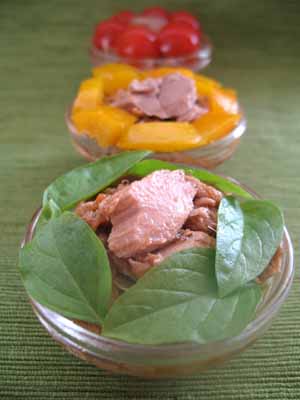
| If you like canned tuna or salmon, you’ll love these. If you’re not crazy about canned fish, we bet you’ll be saying “G’Day” to G’Day Gourmet. Shown: Tomato Basil, Tomato Salsa and Tomato Onion tunas. Photo by Melody Lan. |
| WHAT IT IS: Single-serve seasoned canned tuna in six different flavors, wild Alaskan salmon in three flavors. |
| WHY IT’S DIFFERENT: Gourmet flavors; the tuna is the skipjack species fished in pristine waters, and has very low levels of mercury. |
| WHY WE LOVE IT: Low-calorie (it uses cholesterol- free canola oil to blend the seasonings), controlled portions with ready-to-eat convenience and exciting tastes. Plus, easy portability for work, school, desk drawers and stashing anywhere you need snacks. |
| BUY IT AT: Whole Foods Markets and other fine food stores. |
|
|
 |

G’Day Gourmet:
Singing a Different Tuna
CAPSULE REPORT: When was the first time someone got excited over the taste of tuna, straight from the can? In America, we’re willing to bet the answer is “very recently,” when G’Day Gourmet’s line of “Australian-style savory tuna” arrived. These wonders from Down Under are also user-friendly, in 3.5-ounce single-serve cans with convenient pull-tab tops. Had they not arrived on U.S. retail shelves, we would have had them shipped from Australia!
Instead of mixing tuna with mayo, you enjoy them already seasoned, in Chili, Lemon Pepper, Mild Indian Curry, Tomato Basil, Tomato Salsa and Tomato Onion. There are three flavors of canned salmon as well. Happy news for dieters, four of the six tuna flavors are from 135 to 168 calories; the three salmons are from 99 to 145 calories. Single serve, loaded with Omega 3’s, portable and absolutely delicious—sorry Charlie, no other canned tuna (or salmon) stands a chance with us now. Available at Whole Foods Markets nationwide, with additional distribution in the works. NOTE: Do not confuse this wonderful product with Bumble Bee Sensations, a sad imitation of inferior taste and added sugar. Would you put sugar in your tuna? Read the full review below.
- For reviews of more of our favorite seafood products, click here.
- For the table of contents of the August issue of THE NIBBLE online magazine, plus the back issues archive and our most popular articles, click here.
- All of the Top Pick Of The Week newsletters are permanently archived on TheNibble.com, in chronological order and by product category.
|
Perfect For Lunch
 |
 |
 |
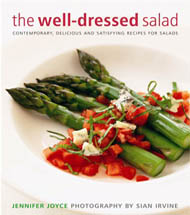
| The Well-Dressed Salad, by Jennifer Joyce. If you view salads beyond a few greens on the side, this book will expand your horizons even more. With stylish, healthy recipes that explore textures and flavors from around the world, you’ll make exciting vegetable, noodle, rice, meat, fish and poultry salads that promise to please as both sides and mains for lunch and dinner. Click here for more information or to purchase. |
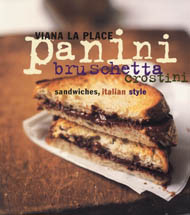
Panini, Bruschetta, Crostini: Sandwiches, Italian Style, by Viana La Place. A fun, inventive and mouth-watering collection of sandwiches. Recipes for breakfast, lunch, snacks and hors d’oeuvres, including both simple and elegant bruschetta and crostini, the Italian open-faced toasts and canapés. There are sweet versions too2. Click here for more information or to purchase. Check below for our favorite panini press. |
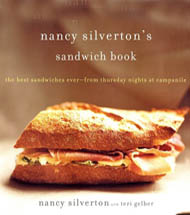
Nancy Silverton’s Sandwich Book: The Best Sandwiches Ever—from Thursday Nights at Campanile, by Nancy Silverton and Teri Gelber. If you can’t get to L.A. to eat the sandwiches at Campanile, you can make them at home. Sophisticated and unusual ideas include the Fried Oyster Sandwich; Ham, Creamed Spinach and Stewed Leeks; plus “sweet sandwiches” made of cake and filling. Click here for more information or to purchase. |
Singing A Different Tuna: G’Day Gourmet Seasoned Canned Tuna & Salmon

The are several species of tuna, five of which comprise the world’s significant commercial crop. Four names are likely familiar: albacore, bigeye, bluefin and yellowfin*. The fifth, skipjack, may be less of a household name, although it’s the largest source of canned tuna in the world and is in most of the cans labeled “light” tuna.
*YELLOWTAIL is a member of the jack family (Carangidae). The Japanese yellowtail (Seriola quinqueradiata) It is a small fish that, at 3 kilograms (6.6 pounds) is called hamachi in Japan and at 5 kilograms (11 pounds) is called buri. TUNA is a member of the mackerel family (Scombridae). Yellowfin tuna (Thunnus albacares) is commonly 80 pounds and occasionally reaches 200 pounds.
Skipjack is found in all the tropical and subtropical waters of the world, except for the eastern Mediterranean and Black Seas. It is much smaller than the other four species—generally just 6 to 8 pounds. Environmentally-focused consumers will like knowing that dolphins do not swim together with such small fish, as they do with the larger tuna, which makes skipjack a virtually guaranteed dolphin-safe species. The G’Day Gourmet skipjack, 1-1/2 to 2-year-old fish caught in the more pristine waters of the Indian Ocean, have very low mercury levels due to both the cleaner waters and the young age of the fish (larger, older fish have been in the water longer and have absorbed more pollutants).
The meat isn’t pinkish “white meat” like albacore, but darker meat “light tuna.” While white albacore is generally perceived as the “better” canned tuna, to our palate, a quality light tuna, like the Italian tunas that are often sold in supermarkets and specialty food stores, is much more flavorful. G’Day Gourmet seconds the point. We flipped for the taste of these all-natural tunas and their canned salmon cousins. That’s the good news; there’s a bit of a down side for some people. The tuna seasonings have some wheat in them (except for one flavor, Tomato Salsa), which will deter people on wheat-free diets. There’s also a smidgen of cane sugar (except for Chili). The salmons, however, are totally wheat- and sugar-free. And while the calories are fairly low for both tuna and salmon, there’s fat from the canola oil that’s used to dress the fish (essentially, the fish are lightly marinated in seasoned oil).
So this is a low-carb food, but not a low-fat one like tuna packed in water. But then, tuna packed in water is something many of us buy to avoid the calories (or the mediocre oil quality) of oil-packed tunas; then we spend time putting flavor into the dish. The G’Day Gourmet folks have already triumphed on those fronts. We just have to pull the ring tab and enjoy.
Tantalizing Tunas
“Australians don’t eat their tuna slathered in mayonnaise,” explained the representative from G’Day Gourmet. “This is normal for us.” About half of the canned fish sales volume in Australia is in savory (seasoned) tuna and salmon, and you are about to discover why. Put great fish in a can with sea salt, fresh herbs, spices and quality canola oil and you’ve got tuna (and salmon) Aussie-style.
- Chili. This flavor has a nice amount of spiciness—not too hot, but there’s still a “tingle” on the finish. There’s even a small, seeded chili in the can. It’s seasoned with chili oil as well. (243 calories)
- Lemon Pepper. Some batches we’ve had have been more lemony with a light touch of pepper; some are more peppery. We like it either way, but a squeeze of fresh lemon juice makes it even livelier. It’s seasoned with lemon juice, cracked pepper, soy oil, soy and spices. (223 calories)
- Mild Indian Curry. We have made curried tuna for years (with mayo) and we like this better than our own. A light curry flavor, seasoned with natural herbs and spices. (162 calories)
- Tomato Basil. Delightfully infused with the flavor of fresh basil. The ingredients include tomato paste, vinegar, oven-dried tomato, spices and, of course, basil. (135 calories)
|

Tomato Salsa tuna goes great with bell peppers, cut
up or stuffed into a whole one. Photo by Melody Lan.
|
- Tomato Salsa. Subtle flavors of tomato and bell pepper with a light salsa spiciness. We enjoy serving ours stuffed into a bell pepper. While all the flavors work this way, it perfectly accents Tomato Salsa. The ingredients include onion, dried roasted onion, tomato paste, bell pepper and spices (this flavor has sugar but no wheat). (168 calories)
- Tomato Onion. The sweet onion and tomato flavor comes from real onion, vinegar, tomato paste and spices. Perfect for a tuna melt! (140 calories)
We liked them all, with particular nods to the Chili, Mild Indian Curry and Tomato Basil...but everyone will have personal favorites based on their regular flavor preferences.
The Competition Arrives: Bumble Bee & Starkist Flavored Tunas
UPDATE APRIL 2007: About six months after G’Day Gourmet first arrived on these shores, StarKist entered the market with a Gourmet Choice Yellowfin Marinated Tuna Fillet, in extra virgin olive oil and lemon dill seasoning. It is delicious—and OU kosher, too, for those who observe. We recently finished testing Bumble Bee Sensations™ Tuna Medleys and wish we could say the same. The line comes in snack-size 3-ounce cans (like G’Day Gourmet, but packaged with Ritz-type crackers and a small plastic spoon) and in a standard size. Thank goodness we opted for the smaller. We took a bite of Spicy Thai Chili—which looked almost exactly like G’Day Gourmet’s Chili, down to the tiny chili on top of the tuna—and the first taste was a mouthful of sugar! Yes, folks, there’s sugar in the can of tuna—of all three flavors, in fact, although the lemon juice and pepper in the Lemon & Pepper flavor cover it up. The Sundried Tomato & Basil tastes like Tuna and Candied Tomatoes—dreadful. Why, Bumble Bee, why?
Aus-some Canned Salmon
Canned Alaskan wild salmon is similarly seasoned, in Chili, Lemon Pepper and Smoked. We have never been canned salmon fanciers—we love fresh salmon, and what we’ve seen in the canned state has been generally unappealing, suitable only for frying up in our mother’s salmon croquette recipe. But the zingy G’Day Gourmet salmons shook our minds and rattled our brains—they may convert whole generations of Americans to canned salmon. And where else can one find a tasty 99-calorie snack like the kickin’ Chili salmon (straight out of the can or with a few romaine leaves)?
- Chili. Like the tuna, it’s flavored with chili oil and has a small chili pepper in the can. (99 calories)
- Lemon Pepper. Very peppery and exciting. Made with lemon juice, lime, cracked pepper and spices. (145 calories)
- Smoked. A very light smoky flavor (from natural smoke favor and spice extracts) makes this delightfully different. We enjoyed a double smoky “salmon melt” on toasted pita halves with smoked mozzarella. (115 calories)
Back to Index
Pull Tab & Enjoy: Serving Suggestions
INSTANT HORS D’OEUVRES: Add tuna to the
vegetable, cracker, or bread of your choice.
Photo by Melody Lan.
|
Aussies like the grab-and-go convenience of the individual sizes and pull-tab tops. Even with a can opener, we’d enjoy these tunas and salmons again and again:
- With a side of ripe tomatoes and sweet onions in a vinaigrette
- Atop salad greens
- On a sandwich or in a wrap or panini
- Stuffed in a bell pepper
- In lettuce cups
- Over hot pasta, or tossed in a cold pasta salad or in a potato salad (no mayo)
- As an hors d’oeuvre, on party bread, crackers, boiled new potatoes, cherry tomatoes, large radish or cucumber slices or endive leaves
- As a convenience food (stash them in desk drawers, lockers, gym bags, glove compartments, anywhere you need a snack or a quick meal)
|
It’s a fun food, a gourmet food and a convenience food all-in-one. You can open a can anywhere—there’s no fishy smell, only the yummy scent of the seasoning.
Among the world’s most valuable commercial fish species, tuna are fished in over 70 countries. There are a number of species of tuna in the Scombridae family—some in large supply and with tasty meat, some neither. The most important commercial species are:
- Albacore (Thunnus alalunga): High-fat and rich in omega-3 fatty acids, the albacore has the lightest flesh (white with a hint of pink) and is the only tuna with meat that can be called “white” in the U.S. Its prized white flesh and mild (some say dry) flavor make it the most expensive canned tuna, with comparisons to chicken. This earned it the sobriquet“chicken of the sea” and created a major brand of the same name, ultimately leading a confused Hollywood star to ask, as she was opening a can on her T.V. show, if it was tuna or chicken. Albacore tuna are commonly 80 pounds and can reach 200 pounds.
- Bigeye (Thunnus obesus): Known in Hawaii as ahi, bigeye has a mild flavor and a desirable fat content. It is a popular fresh fish and is often used for canning. Bigeye is similar in appearance to yellowfin. It swims at the greatest depth of all tuna species, and thus has more fat to insulate it from the cold water. This makes it especially attractive for the Japanese sashimi market. It can weigh up to 460 pounds.
- Bluefin (Thunnus thynnus): Bluefin tuna is the most rare tuna, used only in sushi and sashimi. Young bluefin has a lighter flesh and is less strongly flavored; as it grows into adulthood, the flesh turns dark red and the flavor becomes more pronounced. There are three species of bluefin: Atlantic, Pacific, and Southern. The Southern Bluefin is the most overexploited tuna species and the stocks are heavily depleted because the Japanese are willing to pay extremely high prices for it; for this same reason it is rarely found elsewhere. The other bluefin species are similarly rare and under threat. Among the largest tunas, bluefin can weigh over 1,000 pounds.
- Skipjack (Katsuwonus pelamis): Similar in flesh to the yellowfin, the skipjack gets its name because it seems to skip out of the water. Skipjack is the most commonly canned fish: its small size lends itself to canning. It can weigh up to 40 pounds, but is more typically 6 to 8 pounds. The variety is also known as arctic bonito, oceanic bonito, striped tuna, stripies, watermelon and, in Hawaii, aku. There is ongoing debate about its biological classification; previously it was assigned to the Thunnus genus, but is still legitimate tuna.
- Yellowfin (Thunnus albacares): Also called ahi in Hawaii, the yellowfin tuna is usually larger than the albacore, growing up to 300 pounds. It is a big fish that can swim at very high speeds, which may be why, in some areas, dolphins and large yellowfin swim together. Its flesh is pale pink (in the U.S. it must be called “light” meat), with a flavor slightly stronger than the albacore.

What’s In The Can?
- Canned tuna is precooked. It has a shelf life of up to five years.
- White meat canned tuna is albacore, the only tuna that can be called white. Most light meat tuna is skipjack.
- Albacore is packed almost exclusively in water, in solid form.
- Light meat tuna is most commonly packed chunk-style in water, although there is a demand for oil-packed light meat tuna.
- Solid tuna (also called “fancy”) is a solid portion of a loin, cut to fit the can and packed in one layer. The FDA also allows a piece of a segment to be added to fill the container.
- Chunk tuna is a mixture of cut pieces of varying sizes.
|
 |

Tuna Trivia
- Tuna is a member of the mackerel family. It is probably the most popular fish used for canning.
- Canned and pouched tuna are some of the most widely consumed fish products. Americans eat about one billion pounds of canned and pouched tuna annually.
- Japan and the United States are the largest consumers of tuna, using about 36 percent and 31 percent, respectively, of the world’s catch.
- Although tuna is found in all major bodies of water (except the Arctic Ocean), the majority of the supply comes from the Pacific Ocean, which accounts for 66% of the commercial catch. The rest comes from the Indian Ocean (20.7%), the Atlantic Ocean (12.5%) and the Mediterranean and Black Seas (0.8%).
|
For more information, visit TunaFacts.com, the website of the U.S. Tuna Foundation, and ATuna.com.
Back to Index
As soon as we tasted G’Day Gourmet tunas, we knew we had to order them by the case—with some salmon for a change of pace. They are the new healthy convenience food to eat at the office. At first, we felt constrained by the 3.5-ounce portion control. Then we remembered: when one door closes, another opens. We just opened another can of a different flavor!
—Karen Hochman
Updated April 2007
FORWARD THIS NIBBLE to anyone who loves tuna or canned salmon, needs to eat better at work, or in general needs portable healthy food with a shelf life.
G’Day GOURMET AUSTRALIAN-STYLE SAVORY TUNA & SALMON
TUNA; Chili, Lemon Pepper, Mild Indian Curry, Tomato Basil, Tomato Salsa, Tomato Onion
SALMON: Chili, Lemon Pepper, Smoked
- Tuna Flavors
3.5-Ounce Cans
$1.99
- Salmon Flavors
3.5-Ounce Cans
$2.49
Available at Whole Foods Markets nationwide and other fine retailers.
G-dayGourmet.com
Prices and product availability are verified at publication but are subject to change.
|
 |

Say “G’Day” to new tastes and convenience in canned fish.
Back to Index
|
Sandwich Books & Favorite Panini Press
 |
 |
 |
Simple Italian Sandwiches: Recipes from America’s Favorite Panini Bar, by Jennifer Denton and Jason Denton. With a panini grill (or
a toaster oven) and a few simple ingredients, you can be turning out sandwiches like your favorite café. From Oven-Roasted Tomato and Arugula Paninito to Fig, Prosciutto and Arugula Bruschetta, it’s all easy and delicious. Click here for more information or to purchase. |
Villaware V2160 UNO ProPress Panini Grill. Forget George Foreman: this is the panini press and grill you want. It makes restaurant-quality pressed sandwiches and also grills meats for healthy, low-fat dinners. It can press about four large panini sandwiches, sear four boneless chicken breasts or grill four servings of vegetables at once. Click here for more information or to purchase. |
Wraps: Easy Recipes for Handheld Meals, by Sara Corpening Whiteford, Mary Corpening Barber and Lori Lyn Narlock. You won’t need the sandwich press for this one! Try an Italian wrap with pine nuts and bell pepper or a Thai wrap flavored with ginger and curry. Forget that breakfast burrito: here’s an Eggs Benedict wrap! Fun and delicious. Click here for more information or to purchase. |
FOR ADDITIONAL INFORMATION, special offers,
contests, opinion surveys, THE NIBBLE
back issues archive, product gift-finder, links to our favorite
food websites, and the ability to nominate YOUR favorite nibbles,
visit the home page of TheNibble.com.
Do you have friends who would enjoy THE NIBBLE?
Click here to send them an invitation to sign up for their own copy. |
ABOUT THE NIBBLE. THE NIBBLE™, Great Food Finds™, is an online magazine about specialty foods and the gourmet life. It is the only consumer publication and website that focuses on reviewing the best specialty foods and beverages, in every category. The magazine also covers tabletop items, gourmet housewares, and other areas of interest to people who love fine food.
© Copyright 2004-2008 Lifestyle Direct, Inc. All rights
reserved. All information contained herein is subject to change at any time
without notice. All details must be directly confirmed with manufacturers, service
establishments and other third parties. The material in this newsletter may not
be reproduced, distributed, transmitted, cached, or otherwise used, except with
the prior written permission of Lifestyle Direct, Inc.
|
 |
|
 |